Why My Home Still Felt Messy After Decluttering?

Most people who get tired of Marie Kondoing, donating 40 bags, emptying closets – they get the same old feeling again after 3-6 months: “Something is missing… the house still feels full.”
You are not alone. This feeling comes because de-cluttering was just the first step.
Real peace comes only when you also complete the next 6 steps.
Let's get started.
Step 1: Understand visual clutter – it's the biggest hidden enemy
Having less stuff and reducing visual clutter are two different things. Visual clutter is anything that repeatedly catches your eye and causes brain fatigue – even if it's perfectly organized.
Common examples (present in 92% of households):
- Collection of children's artwork, calendars, magnets on the fridge door
- 7-8 books, 4 remotes, 3 coasters, 2 candles on the coffee table
- 14 pairs of shoes scattered in the entryway (even if in the shoe rack)
- 21 photo frames of different sizes arranged randomly on the wall
Real peace begins only after removing all this.
Golden Rule:
"There should be no more than 3 visible objects on a surface." Just a tray + a book + a small plant on the coffee table. Thats it.
Everything else is in drawers or closed cabinets.
Step 2: Create a permanent, labeled "home" for each item
If you can find something in 15 seconds with your eyes closed – your home is truly organized.
The most common mess:
- Charger: Living room, kitchen, bedroom, office – everywhere
- Medicines: three different places
- Children's markers, crayons, glue sticks – a few in each drawer
My method:
- Create zones throughout the house
- Sub-zones within each zone
- Labeled bins/boxes/drawers in each sub-zone
- Write clearly with a label printer
Example:
Master Bedroom → Nightstand Drawer → Top Drawer → "Daily Medicines + Ear Plugs + Eye Mask"
Living Room → TV Console → Middle Drawer → "All Remotes + Charging Cables"
When everything has its name and address written in it, the house automatically remains clean.
Step 3: Reduce open storage by 80%
There was a lot of craze for open shelving in the last 8-10 years.
But the truth is that 95% of families are not able to maintain it.
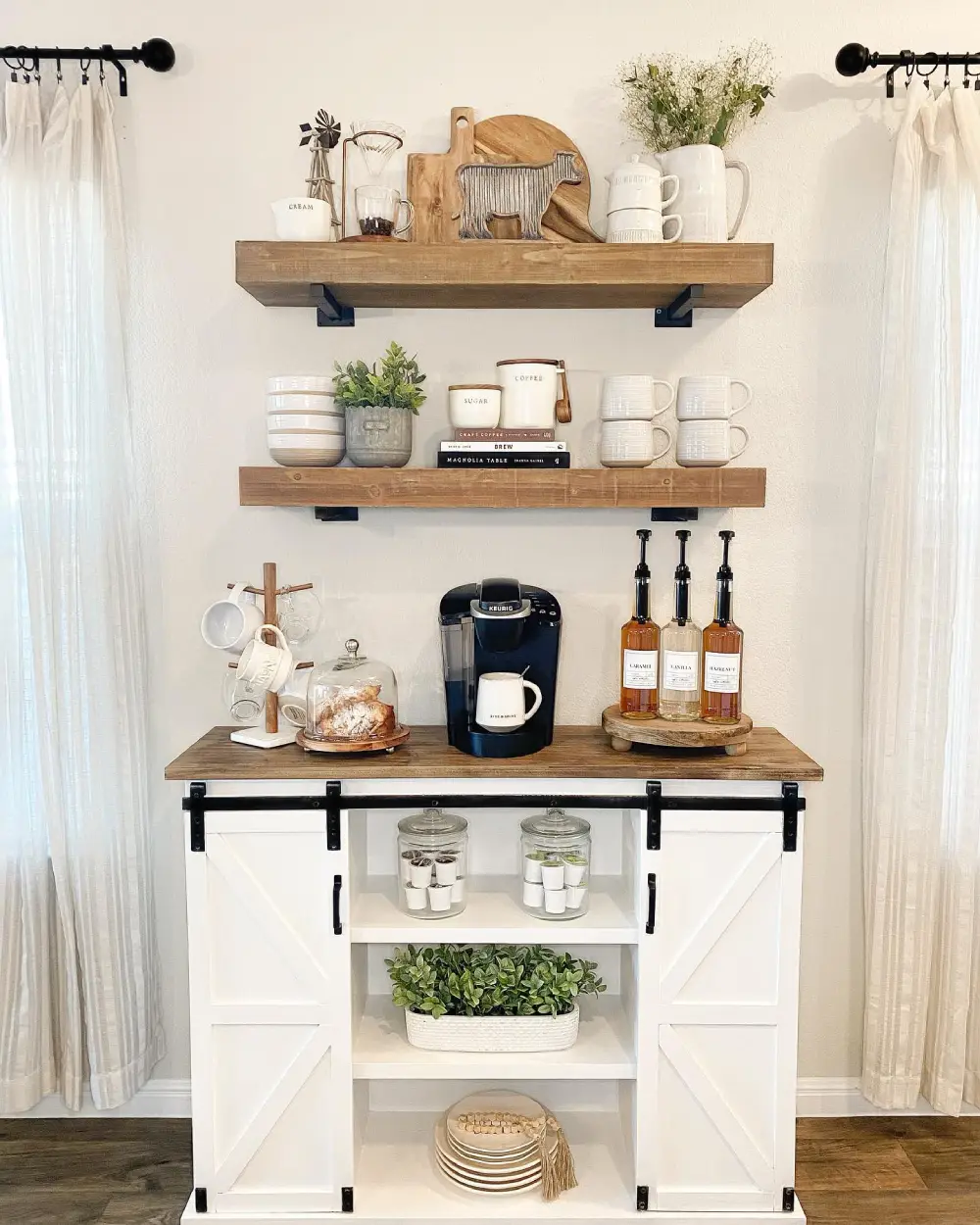
Open shelving looks beautiful only when:
- Everything should be of the same color- Everything is the same size
- Dusting should be done every week.
Which is not possible in life.
My suggestion:
Either close all open shelving or remove 80% of the items.
In the kitchen, shift the utensils which are not used daily to the upper cabinet.
Leave only the 6-8 most beautiful pieces visible.
Step 4: Create a daily reset routine – just 12 minutes
De-cluttering is a one-time process.
Maintenance is a daily process.
My daily 12 minute routine from 7:45 to 7:57 pm (with timer):
- Making the bed (2 minutes)
- All the clothes in the hamper (1 minute)
- Dishes in the dishwasher or out of the sink (3 minutes)
- Coffee Table + Dining Table Clear (2 Minutes)
- All shoes and slippers in place (1 minute)
- Empty the inbox basket (mail, kids' school papers, receipts) (3 minutes)
These 12 minutes are the most valuable investment I can make for the mental health of my entire family.
As soon as you wake up in the morning, the house is already clean – the whole day goes well.
Step 5: Strictly enforce the inbox system and "one in, one out" rule
The house cannot become messy without new things coming into the house.
I have two inboxes in my house:
- A pretty basket in the entryway – All the day's paper, receipts, kids' papers go here
- A big bag in the laundry room – this is where the clothes you no longer want go
Every Sunday evening in 15 minutes:
- Inbox is empty (scan, file, or trash)
- The donation bag is closed and put in the car.
And the strictest rules:
If a new thing comes into the house, an old thing will go out on the same day.